
PODIATRY BILLING
Podiatry Medical Billing Services
Elevate your podiatry practice with specialized billing solutions — leverage our expertise across every discipline of podiatry.
25%
Collections increase (case study)
23%
Denial rate reduction (case study)
50 states
Practices supported nationwide

Podiatry Medical Billing Services
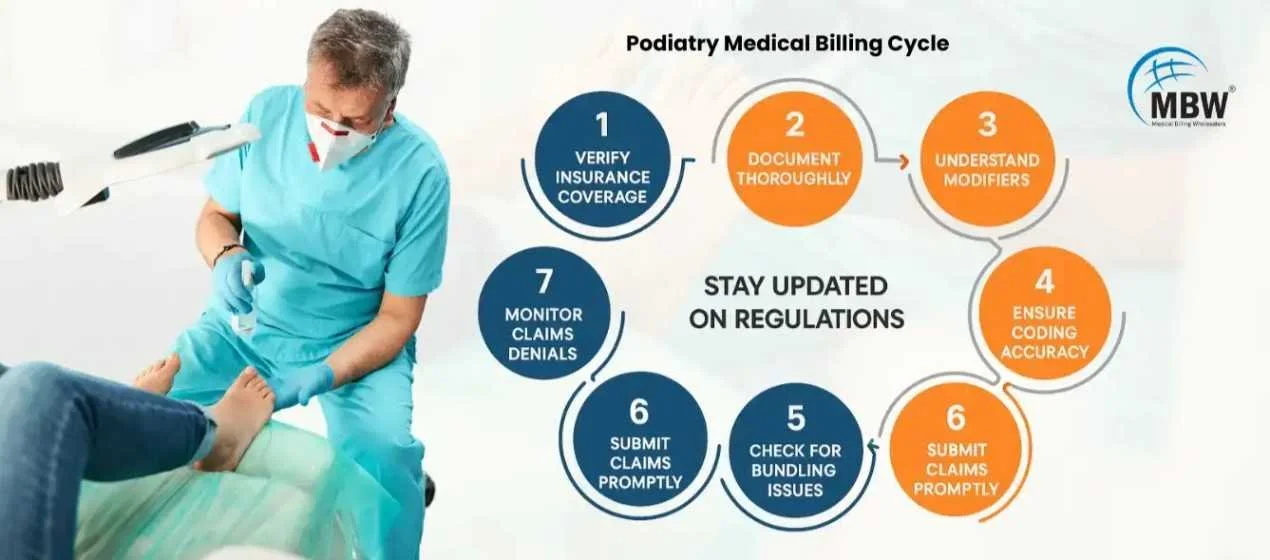
Podiatry billing services require specialized expertise due to complex documentation requirements, Medicare coverage rules, and the detailed coding guidelines associated with foot and ankle treatments. Because these services involve multiple procedures and strict payer requirements, accurate coding and documentation are essential to ensure appropriate reimbursement.
The Complexity of Podiatry Billing
Podiatry services frequently involve elderly patients, increasing the role of Medicare billing requirements. Other factors that add complexity include:
- Modifier Usage (Q7/Q8/Q9): Class findings modifiers must accurately reflect the number of qualifying conditions to support routine foot care claims.
- Inclusive Procedure Coding Rules: Certain podiatric procedures are bundled under NCCI edits and cannot be billed separately.
- Prior Authorization: Many payers require authorization for orthotics, surgical procedures, and durable medical equipment.
- Routine Foot Care Frequency Limits: Medicare limits how often routine foot care can be billed without qualifying systemic conditions.
Q Modifiers in Podiatry Billing
Q modifiers document specific clinical findings related to the patient’s condition: Q7 (one Class A finding), Q8 (two Class B findings), and Q9 (one Class B and two Class C findings). These modifiers are often used with procedure codes such as 11055–11057, 11719–11721, and G0120 to indicate qualifying clinical conditions and ensure accurate claim processing.
✓
Insurance eligibility verification: Confirming coverage and benefits before services are provided to reduce denials.
✓
Prior authorization: Obtaining authorization and including the authorization number during claim submission.
✓
Inclusive procedure awareness: Avoiding denials from billing inclusive codes like 11719, 11721, and G0127 together.
✓
Frequency of services: Routine foot care billed within NCD/LCD frequency limits, typically once every 60 days.
✓
Q modifier accuracy: Correct application of Q7, Q8, and Q9 modifiers for qualifying clinical conditions.
CODING REFERENCE
Common CPT Codes Used in Podiatry Billing
11055–11057
Paring or cutting of benign hyperkeratotic lesion (corns/calluses)
11719–11721
Trimming of non-dystrophic and dystrophic nails
G0127
Trimming of dystrophic nails, any number
28296
Correction of hallux valgus (bunionectomy)
29580
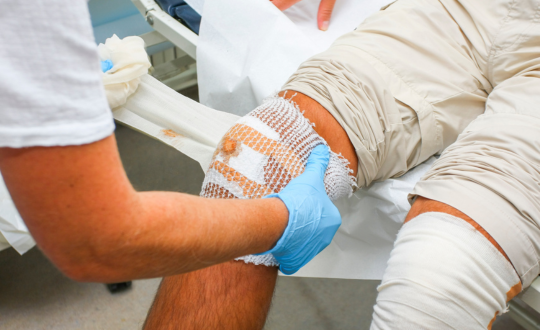
Strapping, Unna boot
97597–97598
Debridement of wound, selective, per session
Benefits of Our Podiatry Medical Billing Services
Certified Professionals: AAPC-certified coders trained in podiatry-specific coding rules.
Expertise on all Major Payers: Established workflows for the payers podiatry practices bill most.
Knowledge of Medicare and Medicaid Policies: Up-to-date on NCD/LCD frequency limits and coverage rules.
Cost Reduction and Improved Efficiency: Streamlined billing that reduces administrative overhead.
Strong Authorization and Follow-Up Processes: Structured prior authorization and A/R follow-up workflows.
Compliance and Risk Management: Coding aligned to CMS and AMA guidelines to reduce audit risk.
PROVEN SCHEDULING OUTCOMES
Real Results for Podiatry Medical Billing Services

Latest Podiatry Medical Billing Services Insights



Frequently Asked Questions
GET STARTED
Maximize Your Podiatry Billing Efficiency
Contact us now for CPC certified coding precision and seamless claim processing.
Talk to an Advisor
Please note, if you are interested in careers, click here to visit our career page.
To learn more, visit our Privacy Policy.