

To appeal denied mental health claims is not only a necessary step but also a chance to recover coverage that patients deserve. Denials happen often, yet many can be overturned with the right approach. This guide explains how to appeal denied mental health claims step by step and what you can do to avoid future denials.
1. Understand the Denial
When you appeal denied mental health claims, always start by reading the Explanation of Benefits (EOB). This letter shows why the insurer denied the claim.
The most common reasons include:
-
The insurer questions medical necessity.
-
You did not obtain prior authorization.
-
The provider was out-of-network.
-
Administrative mistakes like wrong billing codes.
👉 “Insurance paperwork is like a puzzle—except half the pieces are missing.”
2. Gather All Supporting Documents
To appeal denied mental health claims successfully, collect every document connected to the case. You should have:
-
The denial letter (EOB).
-
Bills and receipts for the service.
-
Medical records and progress notes.
-
A letter of medical necessity from your provider.
-
A copy of your insurance policy section on mental health benefits.
For further guidance, you can review CMS documentation compliance resources that outline requirements insurers often use as benchmarks.
The stronger your evidence, the better your chance of overturning the denial.
3. Draft a Strong Appeal Letter
When you appeal denied mental health claims, the letter itself carries weight. Keep it clear, respectful, and focused on facts. Include:
-
Your details and claim number.
-
A direct statement that you are appealing the denial.
-
The date of service.
-
A response to the denial reason, backed by documents.
-
A request for internal review.
👉 “Writing an appeal letter is like building a case—you’re the lawyer, and the insurer is the jury.”
4. Submit and Track the Internal Appeal
After you appeal denied mental health claims, the insurer reviews the request internally. Timelines vary, but responses usually come within 30 to 180 days.
Always:
-
Submit through the proper channel (mail, fax, or online portal).
-
Keep copies of everything you send.
-
Follow up regularly with the insurer if you don’t receive updates.
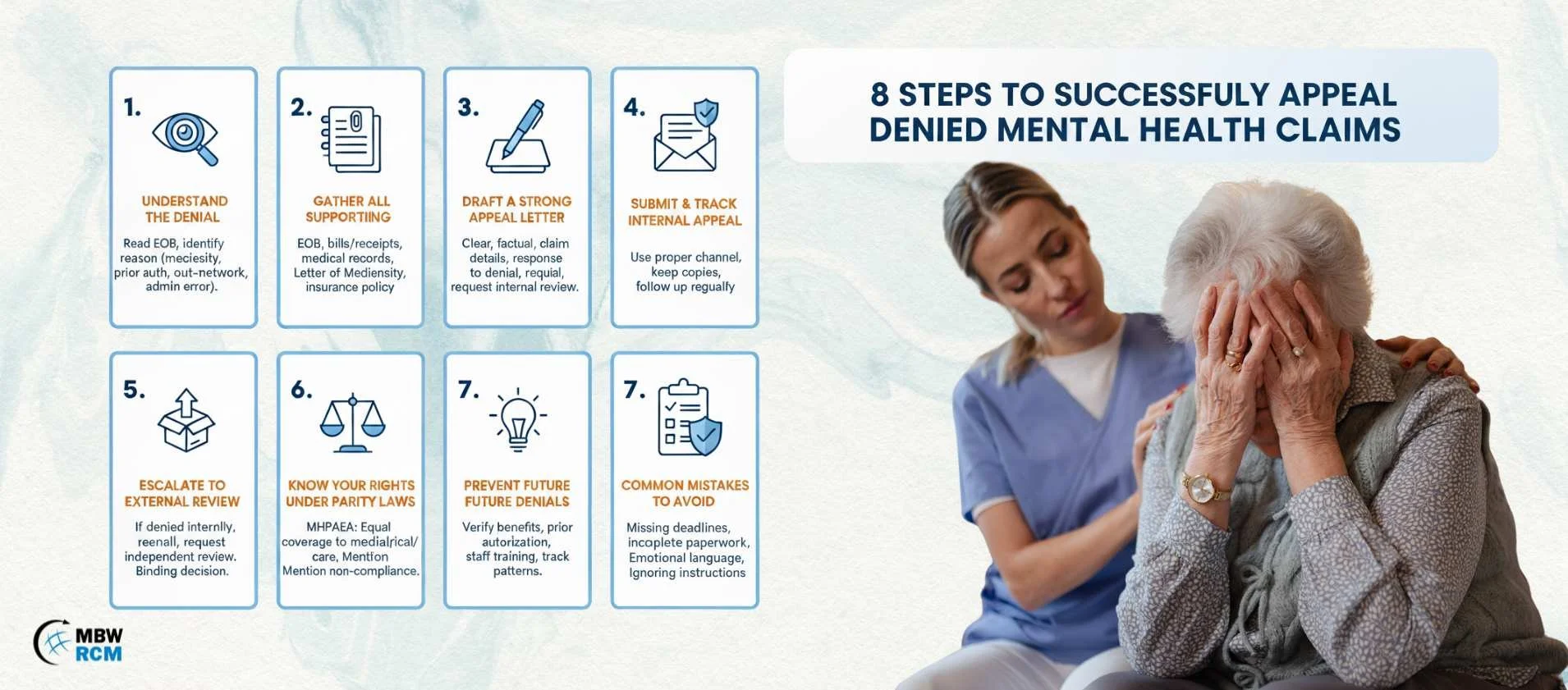
5. Escalate to an External Review
If the insurer denies your internal appeal, then you can escalate. To appeal denied mental health claims further, request an external review by an independent reviewer. This process:
-
Is explained in your second denial letter.
-
Requires you to submit your documents again.
-
Results in a binding decision on the insurer.
For additional consumer guidance, the National Alliance on Mental Illness (NAMI) appeal resources offer practical steps for patients and families.
External reviews are often the turning point in tough cases.
6. Know Your Rights Under Parity Laws
When you appeal denied mental health claims, understanding your legal rights is powerful. The Mental Health Parity and Addiction Equity Act (MHPAEA) requires insurers to cover mental health services at the same level as medical and surgical care.
This means your plan cannot limit therapy sessions unfairly, apply higher copays, or impose stricter rules compared to physical health services. If you believe your denial violates parity laws, mention it in your appeal.
👉 “Parity laws are the shield every mental health claim needs in battle.”
7. Prevent Future Denials
After you appeal denied mental health claims, it’s wise to reduce the chances of repeat issues. You can:
-
Verify benefits before starting treatment.
-
Request prior authorization whenever needed.
-
Train staff on coding and billing requirements.
-
Track denial patterns to spot common errors.
You can also learn how payment posting in mental health billing connects to denial prevention, since misapplied payments often trigger errors.
8. Common Mistakes to Avoid
Many appeals fail because of avoidable errors. When you appeal denied mental health claims, make sure you do not:
-
Miss the appeal deadlines.
-
Submit incomplete paperwork.
-
Use emotional language instead of factual arguments.
-
Ignore the insurer’s instructions.
For more clarity, explore whether behavioral health is the same as mental health since benefit coverage may use different policy terms.
Final Thoughts
When you appeal denied mental health claims, persistence and preparation often lead to success. By knowing why the denial happened, collecting strong documentation, writing a clear appeal letter, and using your rights under parity laws, you raise your chances of overturning the decision.
To strengthen your knowledge, read about mental health billing codes, which often influence whether claims are accepted or denied.
Request for Information
Struggling with frequent claim denials? At MBW RCM, we help providers appeal denied mental health claims and lower rejection rates with proven processes. 👉 Fill out the form below to request more information.