
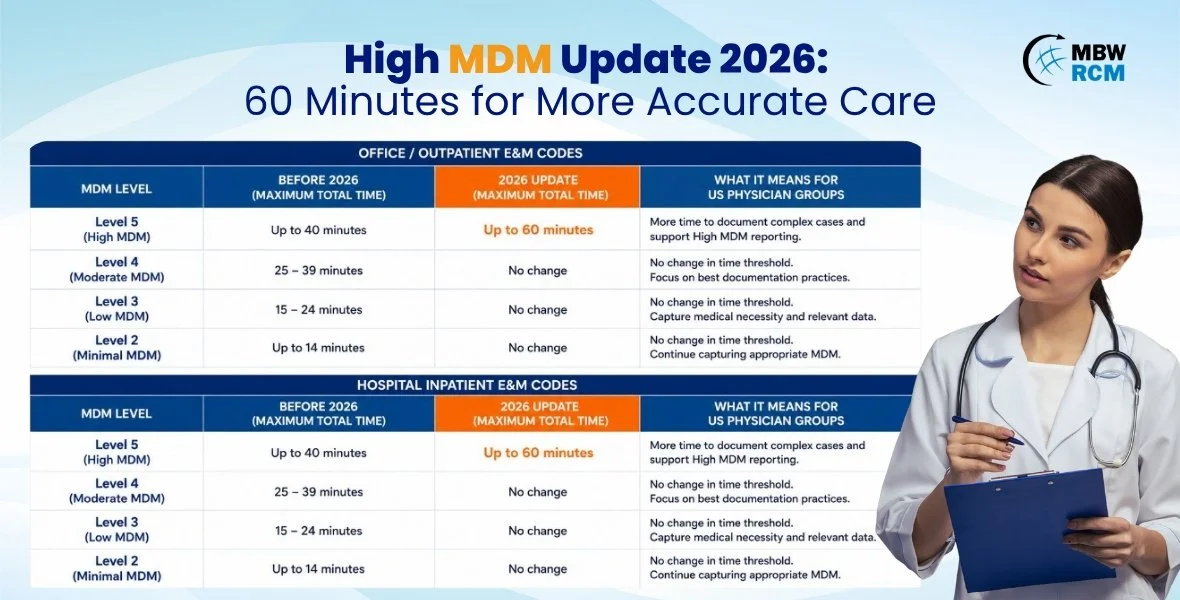
The phrase “new high MDM 60 minutes” is becoming increasingly important for physician groups, medical practices, and healthcare administrators focused on accurate Evaluation and Management (E/M) coding and revenue optimization. As documentation standards continue to evolve, understanding how high Medical Decision Making (MDM) aligns with total physician time can significantly impact reimbursement, compliance, and operational efficiency.
For US physician groups, the ability to correctly document and bill visits involving high-complexity MDM and extended physician time is no longer optional. It directly affects revenue integrity, audit readiness, and patient care workflows.
In this guide, we explain what “new high MDM 60 minutes” means, why it matters, and how physician organizations can improve coding accuracy while reducing compliance risks.
Understanding New High MDM 60 Minutes
Under current E/M coding guidelines, physicians may select office and outpatient visit levels based on either:
-
Medical Decision Making (MDM)
-
Total time spent on the date of the encounter
The term “new high MDM 60 minutes” typically refers to a new patient office visit involving:
-
High-complexity Medical Decision Making
-
Approximately 60 minutes of total physician or qualified healthcare professional time
-
Documentation supporting extensive evaluation, coordination, and management
These encounters are commonly associated with:
-
Multiple chronic conditions
-
Severe acute illnesses
-
Complex treatment decisions
-
High-risk patient management
-
Extensive record review and care coordination
Physician groups managing specialty care, multispecialty clinics, and complex chronic populations frequently encounter these coding scenarios.
Why High MDM Matters for Physician Groups
High MDM visits often represent some of the most resource-intensive patient encounters within a practice. Properly documenting and billing these services ensures physician groups receive appropriate reimbursement for the complexity of care provided.
Key Benefits of Accurate High MDM Documentation
1. Improved Revenue Capture
Many physician groups undercode complex encounters due to incomplete documentation or confusion regarding time-based billing requirements. Proper use of high MDM coding can help recover legitimate revenue that may otherwise be lost.
2. Reduced Audit Risk
Payers increasingly review E/M coding patterns. Physician groups that consistently support high MDM levels with compliant documentation reduce exposure to audits, denials, and recoupments.
3. Better Physician Workflow Alignment
Clear documentation protocols help providers focus on patient care while ensuring coding teams have sufficient information to support accurate claim submission.
4. Enhanced Compliance Readiness
Organizations that align coding practices with CMS and AMA guidelines strengthen internal compliance programs and improve operational transparency.
Components of High Medical Decision Making
To support high-complexity MDM, physician documentation generally reflects elevated levels across multiple categories.
1. Number and Complexity of Problems Addressed
Examples include:
-
Acute or chronic illnesses posing a threat to life or bodily function
-
Multiple unstable chronic conditions
-
Severe exacerbations requiring advanced management
2. Amount and Complexity of Data Reviewed
This may involve:
-
Independent interpretation of tests
-
Review of external notes
-
Ordering and analyzing multiple diagnostic studies
-
Discussions with other healthcare professionals
3. Risk of Complications and Morbidity
High-risk treatment decisions often include:
-
Drug therapy requiring intensive monitoring
-
Decisions regarding hospitalization
-
Emergency surgical considerations
-
Management of severe disease progression
All three elements contribute to determining whether the encounter qualifies for high-level MDM.
The Role of Time in New High MDM 60 Minutes
Time-based coding has become increasingly important for physician practices.
When selecting E/M levels using total time, documentation should include:
-
Total physician or qualified healthcare professional time spent on the date of service
-
Activities performed before, during, and after the patient encounter
-
Care coordination and chart review activities
-
Patient counseling and treatment planning
Activities That Count Toward Total Time
Physician groups should educate providers that qualifying activities may include:
-
Reviewing medical records
-
Ordering medications or tests
-
Documenting clinical information
-
Communicating with family members or other providers
-
Interpreting results
-
Coordinating care plans
Proper time documentation helps support coding accuracy while improving reimbursement integrity.
Common Challenges for Physician Groups
Despite updated E/M guidelines, many organizations still struggle with high MDM coding accuracy.
Incomplete Documentation
Providers may deliver highly complex care but fail to fully document:
-
Clinical risk
-
Data reviewed
-
Decision-making complexity
-
Time spent
Coding Variability Across Providers
Large physician groups often experience inconsistent coding patterns between providers, departments, and specialties.
Increased Payer Scrutiny
Commercial payers and government programs continue to monitor high-level E/M utilization closely.
Staff Training Gaps
Without regular coding education, clinical and billing teams may misunderstand updated E/M requirements.
Best Practices for US Physician Groups
To improve performance around new high MDM 60 minutes encounters, physician groups should implement structured documentation and coding strategies.
Standardize Documentation Templates
Use EHR templates that guide providers through:
-
Problem complexity
-
Data review elements
-
Risk documentation
-
Total time reporting
Conduct Routine Coding Audits
Internal audits help identify:
-
Undercoding opportunities
-
Compliance risks
-
Specialty-specific trends
-
Provider education needs
Invest in Provider Education
Regular coding updates ensure physicians understand:
-
Current E/M requirements
-
High MDM definitions
-
Time-based billing standards
-
Documentation expectations
Collaborate With Experienced Medical Billing Teams
Experienced coding and billing professionals help physician groups:
-
Reduce claim denials
-
Improve reimbursement accuracy
-
Maintain compliance
-
Strengthen revenue cycle performance
Specialty Areas Frequently Impacted
Several specialties commonly report high-complexity encounters involving extensive physician time.
Cardiology
Management of severe cardiovascular disease often requires:
-
Extensive diagnostics
-
Medication management
-
Risk assessment
-
Multidisciplinary coordination
Oncology
Cancer care frequently involves prolonged encounters, treatment planning, and high-risk clinical decisions. For more details on oncology-related E/M coding updates, check out this blog on “E/M Coding in Oncology: Updates for CPT.”
Neurology
Complex neurological disorders may require detailed evaluations, imaging review, and coordination with multiple providers.
Internal Medicine
Patients with multiple chronic diseases often qualify for high-level MDM due to clinical complexity and ongoing management needs.
Pulmonology and Critical Care
Severe respiratory conditions and high-risk patients commonly require extensive physician involvement and documentation.
Financial Impact of Accurate High MDM Coding
For physician groups operating in competitive healthcare environments, coding accuracy directly influences profitability.
Revenue Optimization
Accurate high-level E/M coding helps organizations:
-
Capture appropriate reimbursement
-
Minimize revenue leakage
-
Improve cash flow
-
Reduce denied claims
Operational Efficiency
Clear documentation workflows reduce administrative rework and improve coding turnaround times.
Compliance Protection
Organizations with strong coding governance reduce exposure to:
-
Payer audits
-
Penalties
-
Recoupments
-
Legal disputes
If you want to understand how time and medical decision-making affect E/M coding levels, check out this guide on “Time & Medical Decision-Making Levels in Evaluation and Management.”
Technology and AI in E/M Documentation
Many physician groups are now adopting AI-assisted documentation tools and advanced coding technologies.
These solutions can help:
-
Identify missing documentation elements
-
Suggest coding opportunities
-
Improve provider efficiency
-
Reduce administrative burden
-
Enhance compliance monitoring
However, physician oversight remains essential to ensure documentation accuracy and clinical integrity.
Future Trends in E/M Coding
Healthcare reimbursement models continue to evolve.
Physician groups should expect:
-
Continued focus on documentation quality
-
Expanded use of AI-driven coding tools
-
Greater payer scrutiny of high-level E/M claims
-
Increased emphasis on value-based care
-
Enhanced compliance requirements
Organizations that proactively strengthen coding processes today will be better positioned for long-term financial stability.
Conclusion
The growing importance of new high MDM 60 minutes coding reflects the increasing complexity of patient care across the US healthcare system. For physician groups, understanding how to properly document high-complexity Medical Decision Making and total physician time is critical for compliance, reimbursement, and operational success.
Accurate coding not only protects revenue but also demonstrates the true complexity of care physicians provide every day.
By investing in provider education, documentation improvement, coding audits, and experienced revenue cycle support, physician groups can strengthen financial performance while maintaining regulatory compliance.
As healthcare regulations continue evolving, organizations that prioritize E/M coding accuracy will remain better prepared to navigate future reimbursement and compliance challenges.
Optimize High MDM Documentation and Maximize Reimbursements
From accurate E/M coding and high MDM documentation support to denial reduction and revenue cycle optimization, MBW RCM helps US physician groups improve compliance, streamline workflows, and capture appropriate reimbursements. Fill out the form today to connect with our medical billing and coding experts.