

Provider credentialing in 2026 typically takes between 60 to 180 days, depending on the insurance payer, provider specialty, state regulations, and document accuracy. For many healthcare organizations, delayed credentialing remains one of the biggest challenges affecting revenue cycle management, insurance reimbursements, and provider onboarding.
As healthcare compliance standards continue to evolve, insurance companies are conducting stricter verification checks before approving providers into their networks. The process now includes license verification, CAQH validation, malpractice review, payer enrollment checks, and ongoing compliance monitoring.
According to healthcare industry data, nearly 40% of providers experience delayed reimbursements because of credentialing issues, while practices lose an estimated $7,000–$12,000 per provider each month during enrollment delays. These numbers highlight why provider credentialing services have become essential for medical practices, hospitals, behavioral health clinics, and telehealth providers in 2026.
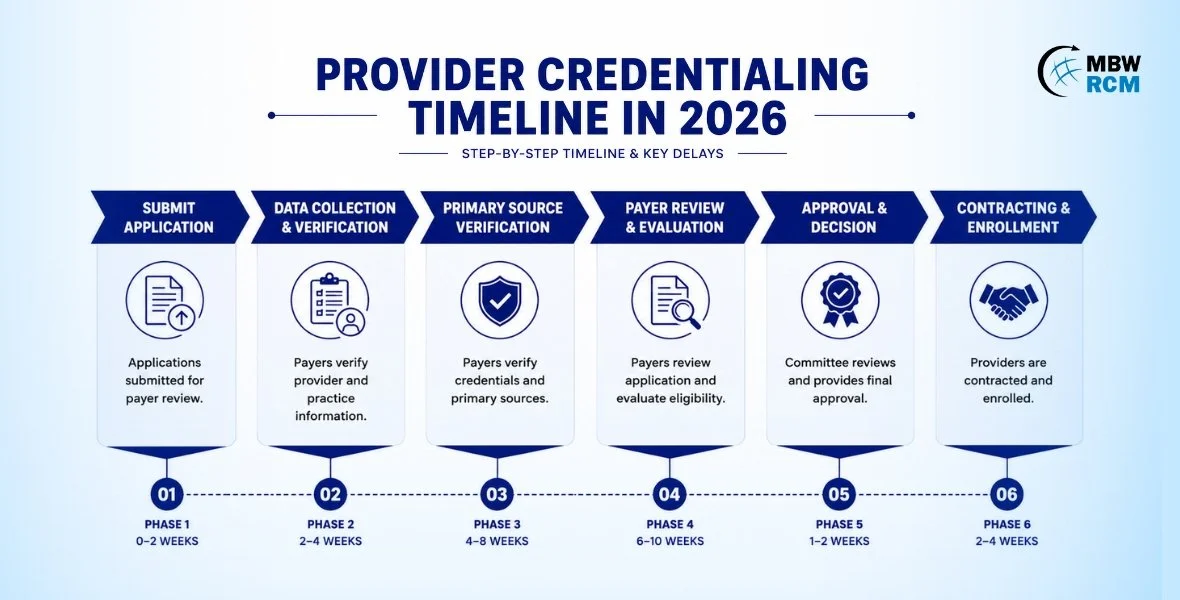
Average Provider Credentialing Timeline in 2026
The provider credentialing process involves several stages, and each stage can affect the final approval timeline. Most healthcare providers should expect the entire process to take anywhere from 2 to 6 months.
Commercial insurance credentialing usually takes longer because private payers conduct multiple internal reviews before approval. Medicare and Medicaid credentialing timelines may also vary depending on state processing capacity and provider specialty.
Why Provider Credentialing Takes Longer in 2026
Provider credentialing delays have increased due to stricter healthcare compliance regulations and growing payer enrollment volumes. Insurance companies are now implementing additional fraud prevention and verification systems before approving healthcare providers.
Most payers now require real-time medical license verification, enhanced sanctions screening, DEA registration validation, malpractice insurance review, digital identity authentication, and CAQH data synchronization. These additional layers improve healthcare compliance but also increase approval timelines.
At the same time, many insurance companies continue to face staffing shortages within credentialing departments. Larger application volumes combined with limited administrative staff have created significant payer backlogs in 2026.
“Credentialing delays directly affect provider revenue, patient scheduling, and operational efficiency,” says Laura Bennett, Healthcare Operations Consultant.
A recent healthcare operations survey found that credentialing backlogs increased by nearly 22% in the past year, especially for behavioral health providers and telehealth practices.
Common Credentialing Mistakes That Cause Delays
Incomplete applications remain one of the biggest causes of provider credentialing delays. Even a small documentation error can push an application back into review and increase approval timelines by several weeks.
1. Expired or Missing Documents
Expired medical licenses, missing malpractice insurance certificates, or incomplete work history often delay payer approvals. Insurance companies require updated and verified documentation before moving applications forward.
2. Incorrect CAQH Information
Outdated CAQH profiles remain one of the most common credentialing problems in 2026. Incorrect provider data, outdated addresses, or missing attestations can immediately stall the enrollment process.
3. Inconsistent Provider Information
Differences in NPI details, taxonomy codes, provider names, or practice addresses across documents frequently trigger additional payer reviews and verification requests.
Industry reports show that nearly 1 out of every 3 credentialing applications requires corrections or resubmission, which significantly slows down payer approvals.
Want to avoid costly credentialing delays and repeated payer corrections? Here’s how physician credentialing services help streamline approvals and provider enrollment.
Credentialing Timeline by Payer Type
Different insurance payers follow different credentialing procedures. Some payers process applications quickly, while others require multiple approval stages.
1. Medicare Credentialing Timeline
Medicare provider enrollment usually takes between 45–90 days for individual providers. Group provider enrollment may take 60–120 days depending on the complexity of the application.
PECOS enrollment systems have improved processing speed, but audits and verification reviews still create delays.
2. Medicaid Credentialing Timeline
Medicaid credentialing timelines vary by state and provider category. Most Medicaid applications take approximately 60–120 days for approval.
States with high provider enrollment volumes often experience longer processing times due to administrative backlogs.
3. Commercial Insurance Credentialing Timeline
Commercial insurance credentialing generally takes the longest. Most private insurance companies require 60–150 days to complete provider enrollment and network participation approvals.
Large national payers often conduct committee reviews before finalizing contracts.
4. Hospital Credentialing & Privileging
Hospital credentialing and privileging may take 90–180 days because hospitals perform additional peer reviews, competency evaluations, and compliance checks.
Telehealth Credentialing Challenges in 2026
Telehealth credentialing has become more complex because providers often operate across multiple states and payer networks. Each state may require separate licensing and payer enrollment approvals.
The average telehealth provider credentialing timeline now ranges between 90–150 days, especially for mental health and behavioral health providers.
Insurance companies are also increasing compliance monitoring for virtual healthcare services to prevent fraud and improve provider accountability. Managing telehealth credentialing across multiple states and payer networks can quickly become overwhelming. Here are some of the biggest credentialing challenges healthcare providers face today.
“Telehealth expansion has added multiple layers of complexity to provider enrollment and payer approvals,” says David Morgan, Healthcare Compliance Strategist.
Financial Impact of Credentialing Delays
Credentialing delays can severely affect healthcare revenue cycles. Providers cannot bill insurance companies as in-network providers until payer credentialing is fully approved.
Healthcare revenue cycle studies show:
-
Practices lose approximately $7,000–$12,000 per provider monthly during enrollment delays
-
Nearly 30% of denied medical claims are linked to credentialing or payer enrollment problems
-
Around 42% of healthcare practices report revenue disruption because of delayed credentialing approvals
These delays can create serious cash flow problems for new medical practices, group practices, and expanding healthcare organizations. If you are interested to read more about credentialing, please have a look at this blog on ‘‘Prevent Common Provider Credentialing Errors”.
How to Speed Up Provider Credentialing in 2026
Healthcare organizations are adopting faster and more efficient credentialing strategies to reduce payer enrollment delays and improve reimbursement timelines.
1. Start Credentialing Early
Most organizations now begin credentialing 90–120 days before provider start dates. Early submission allows enough time to resolve documentation errors and payer requests.
2. Keep CAQH Profiles Updated
Providers should regularly update medical licenses, DEA certificates, malpractice insurance, work history, and practice locations. Outdated CAQH information remains one of the top causes of payer credentialing delays.
3. Use Credentialing Software
Modern provider credentialing software helps automate document tracking, expiration alerts, payer follow-ups, enrollment status monitoring, and compliance management.
AI-powered credentialing systems are becoming increasingly common in healthcare administration.
4. Outsource Credentialing Services
Many practices now outsource credentialing to experienced provider credentialing companies. Outsourcing reduces administrative workload and improves application accuracy.
Final Thoughts
Provider credentialing in 2026 continues to take between 60 and 180 days, depending on payer requirements, provider specialty, and application accuracy. Despite improvements in credentialing software and automation, insurance payer delays and compliance reviews still slow down approvals across the healthcare industry.
Healthcare organizations that maintain accurate documentation, update CAQH profiles regularly, and proactively manage payer follow-ups can significantly reduce enrollment delays and reimbursement interruptions.
As healthcare regulations continue evolving, efficient provider credentialing and payer enrollment management will remain critical for improving cash flow, reducing claim denials, and supporting long-term practice growth.
This defines the provider’s approved clinical scope.
Get Your Free Provider Credentialing & Practice Assessment
Find out where credentialing delays, payer enrollment issues, and revenue bottlenecks may be affecting your practice. Our experts will review your current credentialing process and provide actionable insights to help improve provider onboarding, reduce delays, and accelerate reimbursements.