

Palliative care is specialized medical care for individuals with serious illnesses. It focuses on relieving pain and managing stress, helping both the patient and their family. The goal of palliative care is to improve quality of life by providing symptom relief, emotional support, and coordinated care. Unlike treatments aimed at curing illness, palliative care prioritizes comfort and dignity.

Palliative Care: Meaning & Definition
-
Palliative care is designed to make people feel better when they are seriously ill.
-
It addresses physical pain and also provides care for hospital understanding-new-patient-cpt-code emotional and spiritual well-being.
-
According to the World Health Organization (WHO), only 14% of those who need palliative care globally receive it. Palliative care supports not only the body but also the mind and spirit.
Palliative Care vs. Hospice: Understanding the Differences
Palliative care and hospice care are often compared but differ significantly in terms of timing, goals, and eligibility. While both focus on comfort, palliative care can be provided at any stage of a serious illness and alongside curative treatments. Hospice care, on the other hand, is reserved for patients who are typically in their last six months of life when curative treatments are no longer an option.
“Hospice is not giving up—it’s showing up with a blanket, a plan, and way too many casseroles.”
5 Stages of Palliative Care
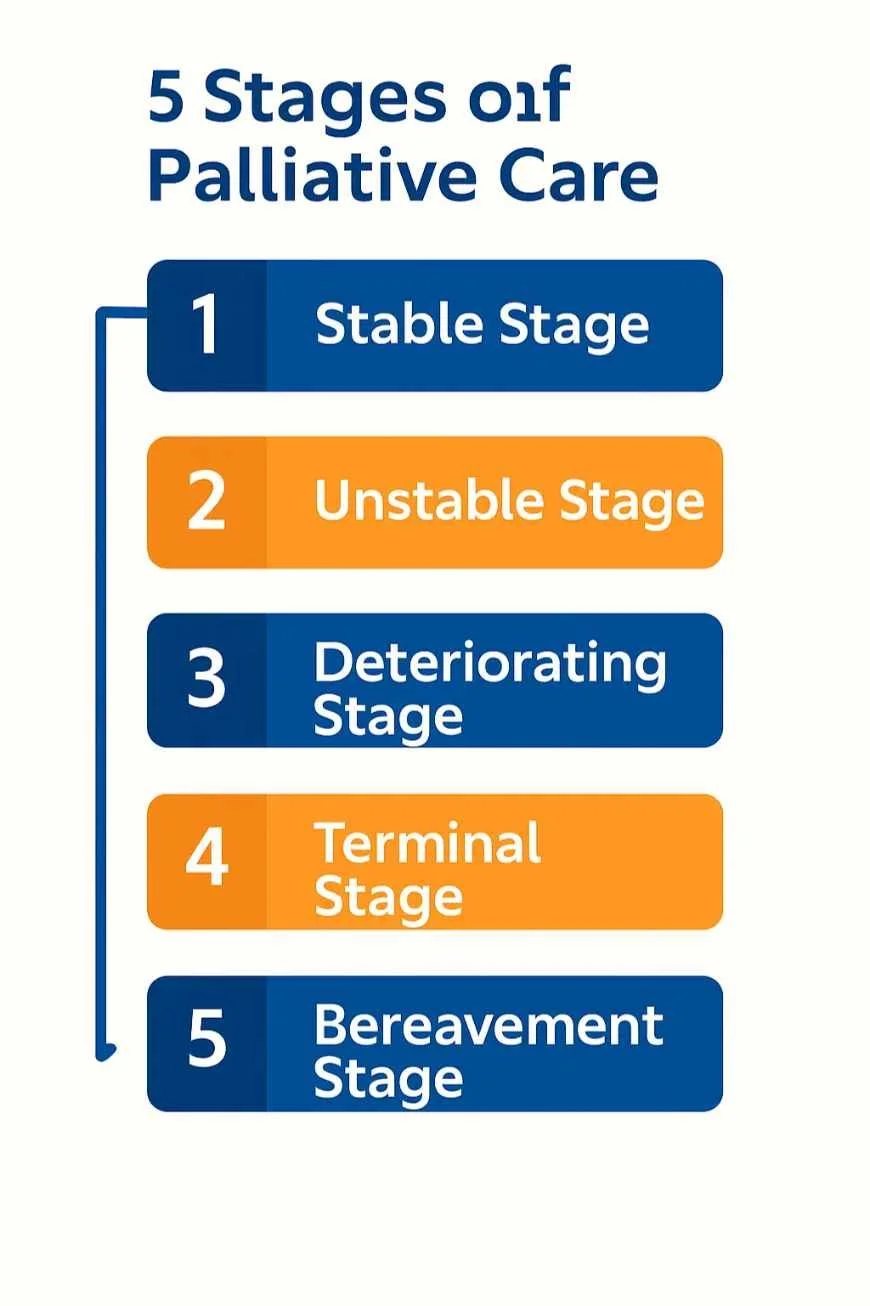
These five stages of palliative care demonstrate how care escalates as the illness progresses. Each stage builds upon the previous one, offering increased levels of support for both the patient and their family.
-
Stable Stage: Diagnosis is confirmed, and a treatment plan is created. Goals of care are discussed.
-
Unstable Stage: Symptoms worsen or unexpected complications arise, requiring urgent attention or adjustments in care.
-
Deteriorating Stage: Health gradually declines. Discussions on care goals become more focused, often involving advanced care planning (ACP).
-
Terminal Stage: In this final stage, life expectancy is limited. Comfort measures and family support take priority.
-
Bereavement Stage: After death, psychological support and grief counseling are provided to the family.
“Grief doesn’t demand attention; it steals it. You can either wrestle with it—or walk with it. Most days, you’ll do both.”
Palliative Care: Managing Common Symptoms
Palliative care often begins with managing common symptoms such as pain, nausea, fatigue, breathlessness, constipation, and delirium. It also addresses anxiety and sadness. These steps not only relieve https://www.ama-assn.org/practice-management/cpt discomfort but also enhance the patient’s overall well-being, making them feel safe and calm. Continuous re-assessment of symptoms is essential due to the high-risk nature of these medical decisions.
High-Risk vs. Moderate-Risk MDM in Palliative Care
“MDM sounds clinical—until you realize it’s just fancy code for ‘doctor brain on turbo mode.’”
High-risk MDM (Medical Decision Making) usually involves very serious health choices. For example, decisions around Do Not Resuscitate (DNR) orders can elevate the risk level. When a new decision is made or discussed, it may be categorized as high-risk.
DNR Status and Documentation
Merely having a DNR is not sufficient for high-risk billing. A new decision or discussion about the DNR or other care goals must be clearly documented.
High-Risk MDM Documentation Example:
-
High-risk condition: Continued management required
-
DNR Decision Made: Discussed today and finalized with family
-
ACP: Hospice referral discussed
Moderate-Risk MDM Documentation Example:
-
High-risk condition, but no new DNR changes
-
Continued pain management adjustments
-
Previously established DNR confirmed
Palliative Care CPT and HCPCS Codes
Billing for palliative care services is based on specific codes. The appropriate code helps ensure payment for services rendered. The procedure codes for reporting palliative care are based on where care is provided and the specifics of the documentation.
ICD-10 Diagnosis Code for Palliative Care:
Use the code Z51.5 when the visit is specifically for palliative care. This supports your billing when used alongside CPT or HCPCS codes.
“Coding isn’t just data entry. It’s the key to patient stories, told in numbers and modifiers.