
EMERGENCY DEPARTMENT BILLING
Emergency Department Billing and Coding Services
Emergency departments are fast-paced environments. Let us help you arrest revenue leakage and improve reimbursements.
64%
Reduction in claim denials (case study)
50 states
Practices supported nationwide
15+ yrs
Emergency medicine billing experience

Emergency Department Billing and Coding Services
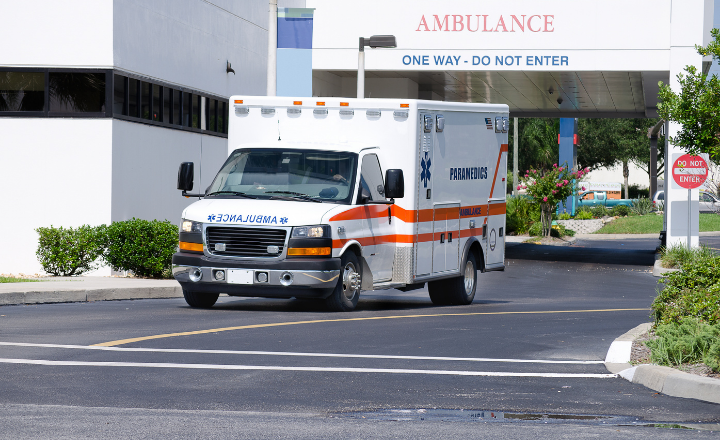
Emergency departments provide immediate care for patients presenting with acute illnesses or injuries without prior appointments. These services often involve rapid clinical assessments, emergency procedures, and ambulance transport documentation, requiring precise documentation, correct code selection, and adherence to evolving reimbursement policies.
Coding Challenges in Emergency Department Billing
ED billing requires efficient documentation and billing workflows to keep pace with unpredictable patient volume. Common challenge areas include:
- Discharges Not Fully Billed (DNFB)
- Ambulance & Life Support Documentation (BLS/ALS)
- Modifier Usage for Transport
- Medical Decision Making (MDM) Level Coding
Common CPT Codes Used in Emergency Department Billing
Best Practices for Emergency Department Billing
Regular review of discharges not fully billed helps identify missed services and improve revenue capture. Accurate terminology and documentation for BLS, ALS, and ambulance mileage are essential to avoid claim denials tied to life support and transport services.
✓
Documentation & charge capture accuracy: Ensuring emergency procedures and evaluations are fully captured and billed.
✓
Modifier and code accuracy: Correct CPT and modifier usage for accurate payer processing.
✓
DNFB identification and resolution: Regular review to catch missed services and improve revenue capture.
✓
Provider credentialing verification: Ensuring emergency physicians and specialists are properly credentialed with payers.
✓
Denial analysis and corrective workflows: Reducing recurring claim issues through structured follow-up.
MBW RCM brings specialty-focused expertise to emergency department billing — accurate charge capture, DNFB resolution, and denial-focused revenue cycle management that helped one ED reduce claim denials by 64%. Our workflows include patient demographic and insurance verification, payment posting and reconciliation, and consistent A/R follow-up, with coding practices that stay aligned to the prudent layperson standard used to determine emergency service coverage.
CODING REFERENCE
Common CPT & HCPCS Codes Used in Emergency Department Billing
99281–99285
ED Evaluation & Management, Levels 1–5
99291–99292
Critical care services, first 30–74 minutes and each additional 30 minutes
G0390
Trauma team activation, Level II
A0425–A0999
Ambulance and transport HCPCS
12001–12018
Simple laceration repair, by anatomical site and length
87880
Rapid strep antigen detection test

Benefits of Our Emergency Department Billing and Coding Services
Improved Revenue | Reduced Denials: Structured workflows that recover revenue and prevent recurring denials.
Trained and Certified Resources: AAPC-certified coders with emergency medicine expertise.
Coding Expertise: Precise CPT, ICD-10, and HCPCS coding for emergency and ambulance services.
Proven Track Record with Major Insurers: Established workflows for the payers EDs bill most.
Expertise with Government Payers: Up-to-date on CMS and government program requirements.
Arrest Revenue Leakage | Reduce DNFB: Proactive identification of missed and unbilled services.
PROVEN RESULTS
Real Results for Emergency Department Billing and Coding Services
Latest Emergency Department Billing and Coding Services Insights





Frequently Asked Questions
GET STARTED
Bring Best-in-Class Billing to Your Emergency Department
Reach out to us now to capitalize on these benefits and elevate your practice’s financial and operational success.
Talk to an Advisor
Please note, if you are interested in careers, click here to visit our career page.
To learn more, visit our Privacy Policy.