
Verifying Patient Eligibility Verification before an appointment helps prevent billing issues and claim denials. By confirming that services are covered by insurance, it ensures smoother operations and a better experience for both patients and healthcare providers. In this article, we’ll discuss why verifying eligibility before every visit is crucial for both healthcare providers and patients.
Understanding Patient Eligibility Verification in Medical Billing
Patient Eligibility Verification is an essential part of the medical billing process. It’s about confirming that a patient’s insurance is active and that the services they need are covered. This step ensures that healthcare providers will be paid for the care they provide, and it helps patients understand what their insurance will cover.
By verifying this information before the appointment, providers can avoid problems like claim denials or billing errors. Many practices use automated systems to quickly check the patient’s insurance details against the insurer’s database, making sure everything is in order—such as coverage, co-pays, and deductibles—before claims are submitted.
Important Reasons for Patient Eligibility Verification Before Every Visit
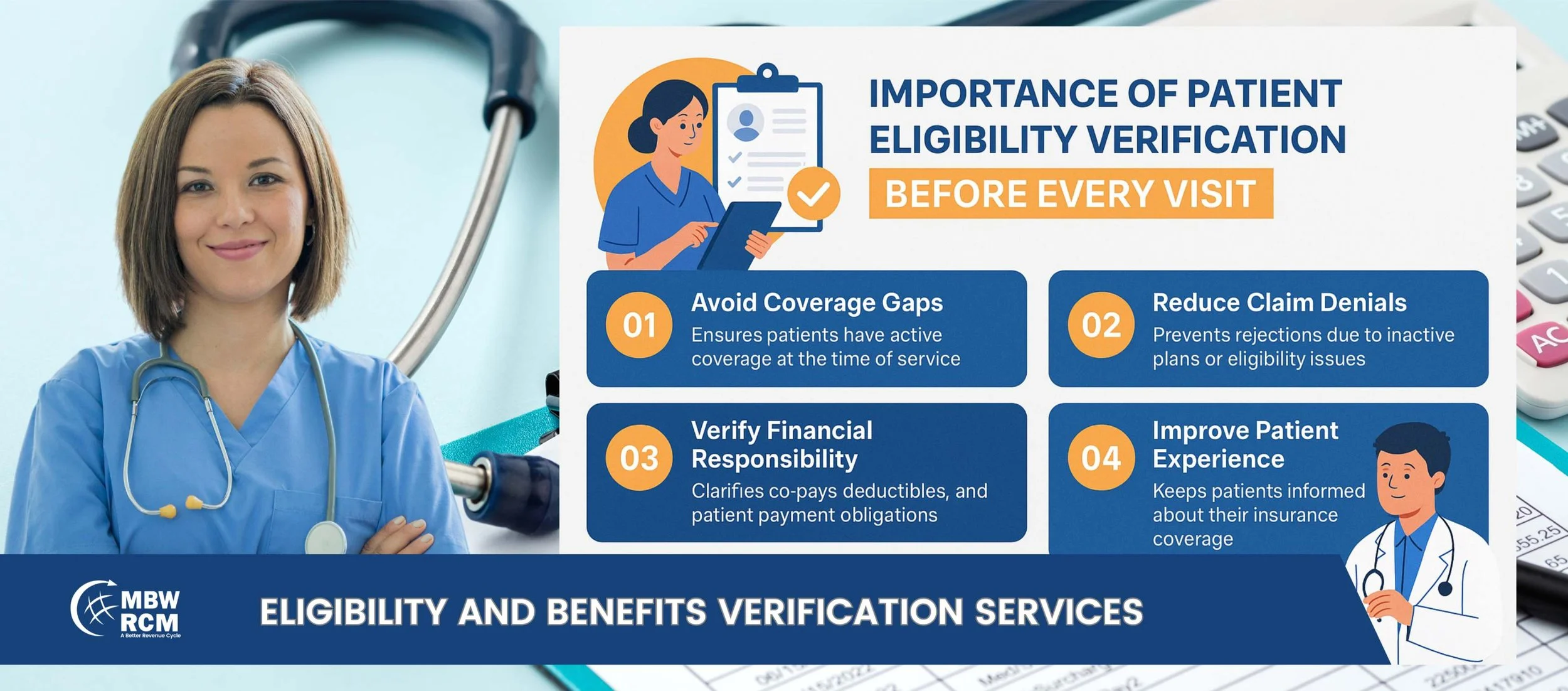
Verifying Patient Eligibility before each visit is essential for preventing various issues and ensuring smooth operations within healthcare practices. Below are the key reasons why this step should never be overlooked:
-
Preventing Claim Denials
If eligibility is not verified before the visit, insurance claims may be denied due to inactive coverage or service exclusions. Patient Eligibility Verification ensures that the patient’s insurance plan covers the required services, reducing the risk of claim denials. Without it, healthcare providers may face rejected claims and delayed reimbursements, leading to additional administrative costs and frustration. To learn more about the importance of insurance eligibility verification read more here.
-
Saving Time and Resources
By verifying eligibility before the appointment, healthcare providers can avoid wasting time during the check-in process. Patients won’t need to wait while eligibility is confirmed, and staff won’t need to spend time sorting out insurance issues. This proactive approach saves valuable resources and keeps appointments running on time, making the entire process more efficient for both parties.
-
Preventing Unexpected Costs for Patients
Without prior verification, patients may be unaware that their insurance does not cover specific treatments or services. This can lead to financial surprises when the bill arrives. Patient Eligibility Verification ensures that patients know exactly what is covered, helping them avoid unexpected medical expenses that could cause stress or financial strain.
-
Improving Patient Experience
No one enjoys delays at the doctor’s office, especially when it comes to financial and insurance issues. A smooth and quick check-in process, aided by eligibility verification, helps improve patient satisfaction. When patients understand their coverage upfront, they are more likely to feel confident and relaxed, resulting in a positive experience. For more information on how eligibility verification and prior authorization work together, check out this article on eligibility verification and prior authorization.
-
Reducing Administrative Burden
Administrative tasks, especially in verifying eligibility, can be time-consuming. Performing this task before the visit allows healthcare providers to reduce the workload at the front desk, letting staff focus on patient care instead of resolving coverage issues. This streamlines office operations and ensures a better workflow.
-
Patient eligibility verification reduces payment delays
By confirming eligibility beforehand, healthcare providers can ensure they are properly reimbursed for the services provided. When claims are submitted with accurate and verified insurance information, there’s less chance of disputes or delays in payments. This directly impacts the healthcare provider’s revenue cycle, ensuring that they maintain steady cash flow.
-
Reducing Appointment Delays
Unverified eligibility can cause appointment delays as office staff may need to contact insurance companies or patients to confirm coverage. With Patient Eligibility Verification, this critical step is completed ahead of time, preventing any last-minute delays and ensuring that patients receive the care they need without unnecessary hold-ups.
-
Ensuring Accurate Patient Information
Eligibility verification not only checks the insurance status but also ensures that the patient’s information is accurate and up-to-date. Incorrect patient details can lead to processing errors, missed payments, and potential complications in the care provided. Verifying eligibility before the visit guarantees that all information is correct, allowing healthcare providers to focus on providing quality care rather than correcting mistakes.
The Process of Patient Eligibility Verification in Healthcare
Verifying patient eligibility before appointments is essential to reduce claim denials, billing errors, and unexpected costs for patients. It ensures that the necessary services are covered by the patient’s insurance, helping providers simplify the billing process. By confirming eligibility in advance, healthcare practices can ensure smoother appointments and reduce potential disruptions. Here’s how the process works.
The process of Patient Eligibility Verification involves several key steps:
-
Collect Patient Information
Gather the necessary details, including the patient’s insurance provider, ID number, and date of birth.
-
Submit Verification Request
Use either automated software or manual methods to submit the patient’s details to the insurer for verification. This can include checking coverage, co-pays, deductibles, and services covered under the plan.
-
Review the Response
The insurance provider will respond with the verification results, confirming whether the patient’s insurance is active and detailing what services are covered.
-
Update Patient Records
Once the verification is complete, the information should be updated in the healthcare provider’s system, ensuring the details are accurate for future visits.
This process can be done manually or via automated systems, which can drastically reduce errors and increase efficiency.
Request a Quote for Eligibility Verification Services with MBW RCM!
Patient Eligibility Verification provides an effective solution to prevent billing issues, claim denials, and unexpected costs. By confirming coverage before each appointment, healthcare providers can improve operational efficiency and enhance patient satisfaction. MBW RCM supports this process by ensuring accurate eligibility verification, reducing errors, and creating a smoother experience for both patients and providers.
Want to reduce billing issues and ensure smoother appointments? Start verifying patient eligibility today. Reach out to us to learn how we can assist in making this process easier for your practice.